-
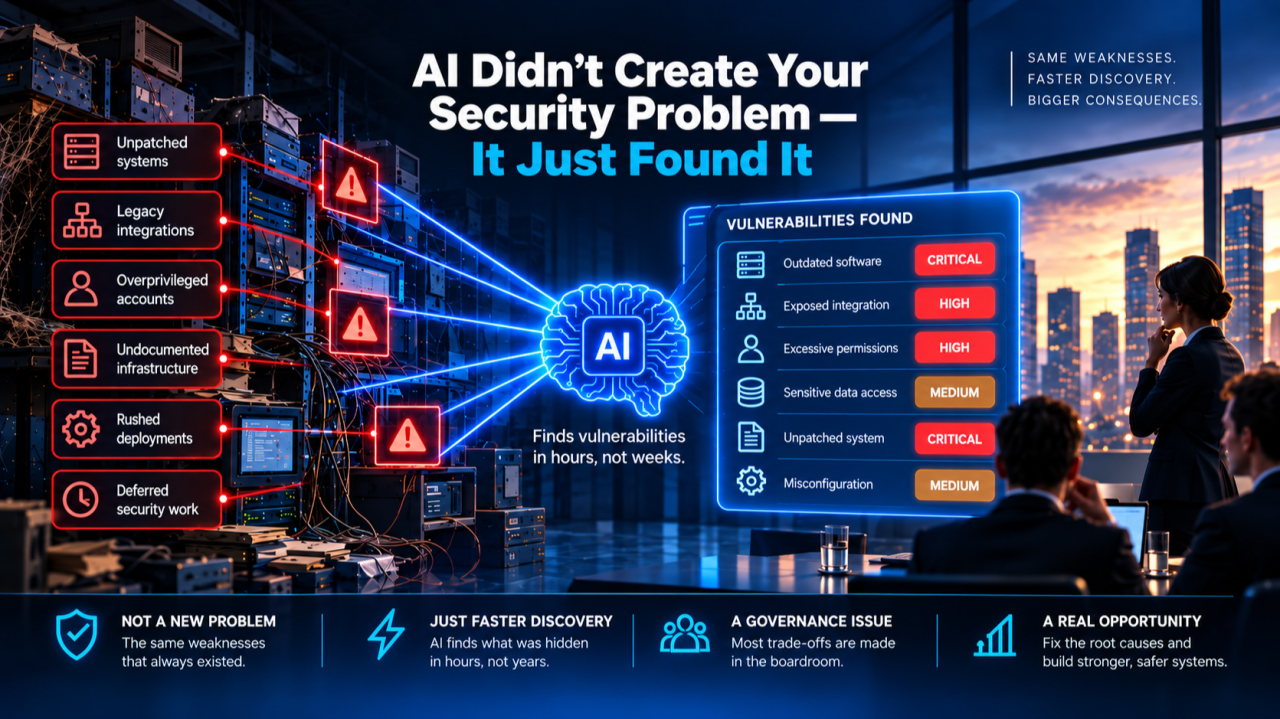
AI Didn't Create Your Security Problem — It Just Found It
AI isn't inventing new weaknesses in your organization. It's finding the ones that were already there, faster than anyone ever could before — and the real gap is at the...
-
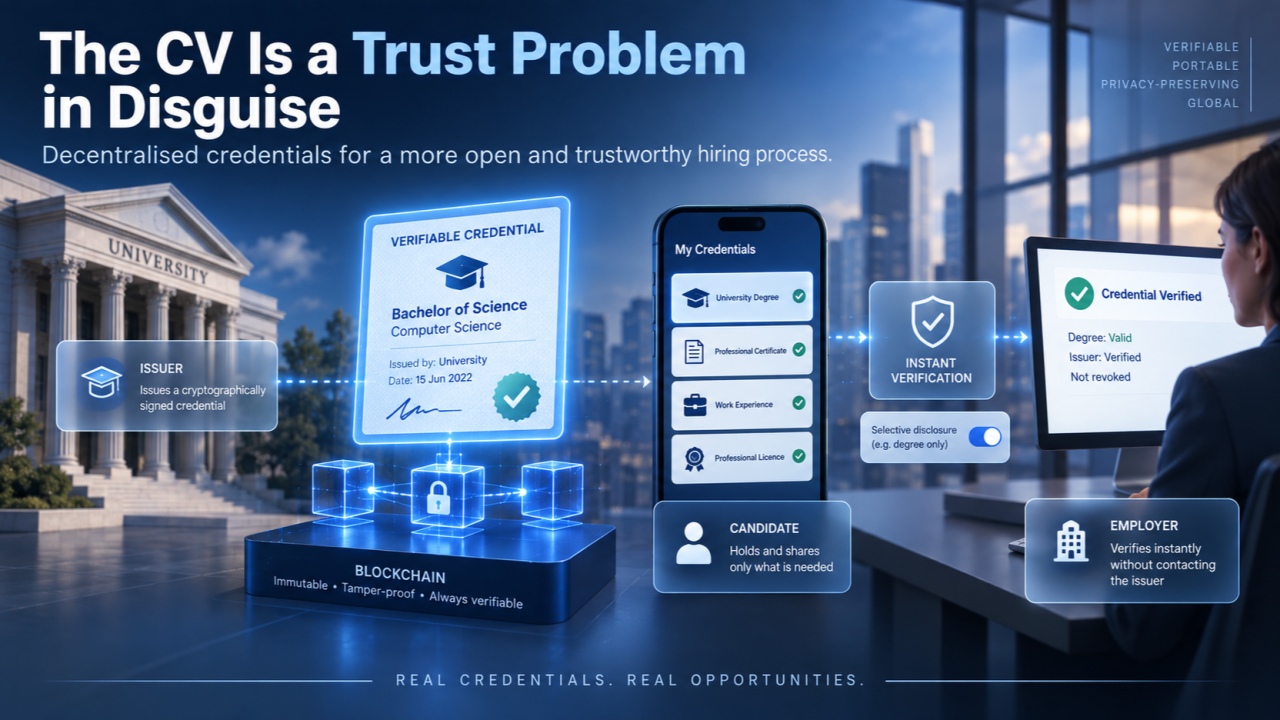
The CV Is a Trust Problem in Disguise: Decentralised Credentials and the Future of Hiring
A CV is a self-authored document and verifying it is slow and expensive. Blockchain-based verifiable credentials solve the trust gap at the architecture level, not the process level.
-
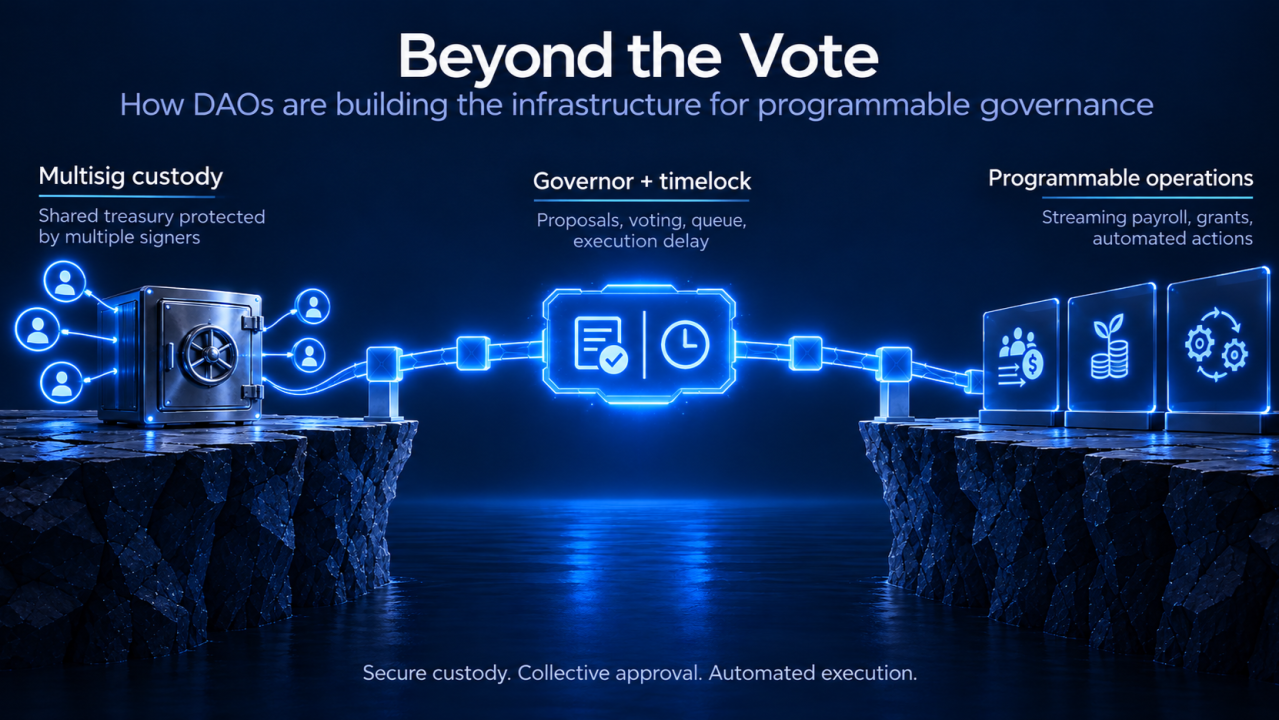
Beyond the Vote: How DAOs Are Building the Infrastructure for Programmable Governance
DAOs collectively control more than $26 billion in on-chain treasuries. The architecture behind that — multisig custody, timelock execution, streaming payments — is relevant well beyond crypto-native organisations.
-
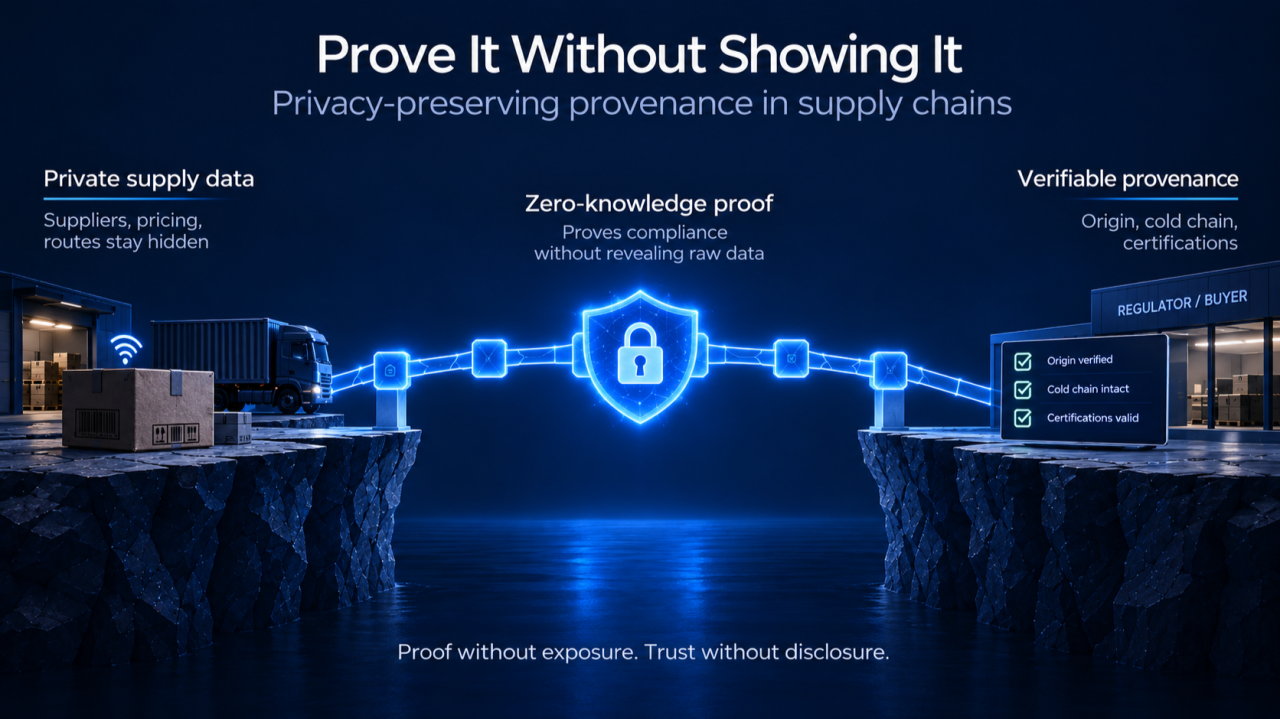
Prove It Without Showing It: Privacy-Preserving Provenance in Supply Chains
Supply chains need both transparency and confidentiality, and public ledgers and private databases both fail to deliver that at once. Zero-knowledge proofs are the structural fix.
-
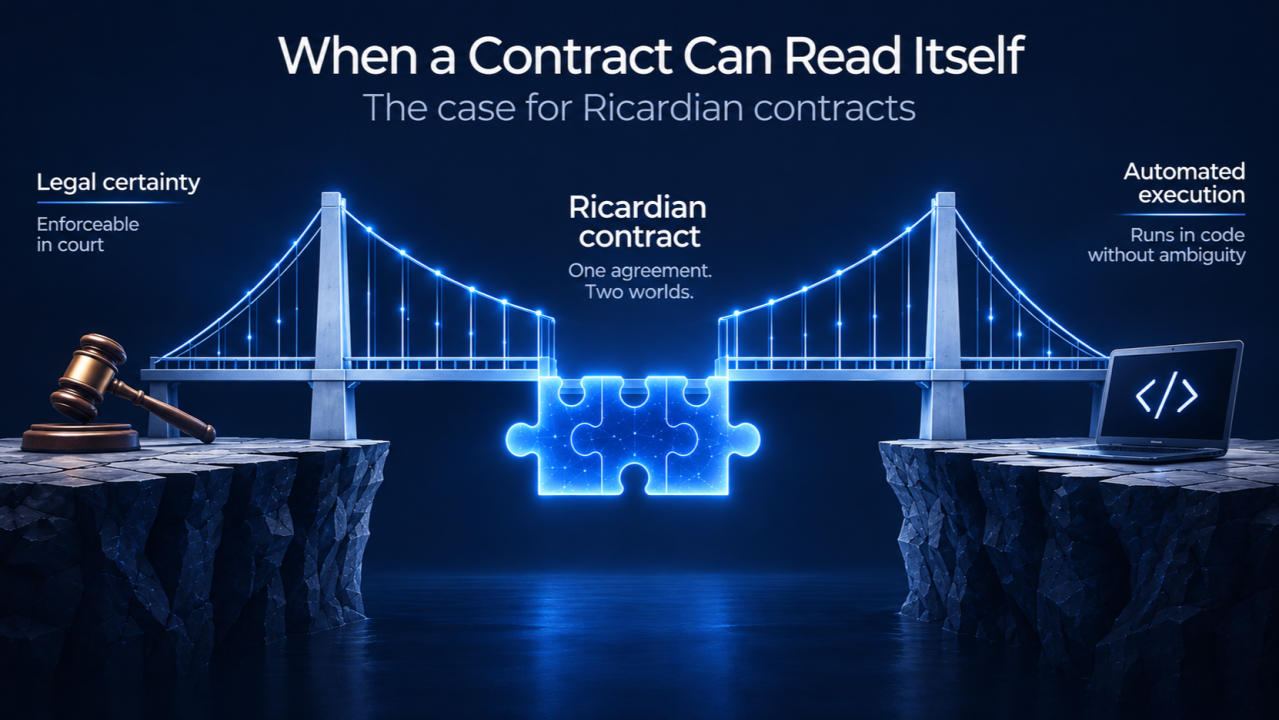
When a Contract Can Read Itself: The Case for Ricardian Contracts
A smart contract executes perfectly but isn't legally binding. A traditional legal contract is enforceable but can't execute itself. Ricardian contracts are a single instrument that serves both masters.
-
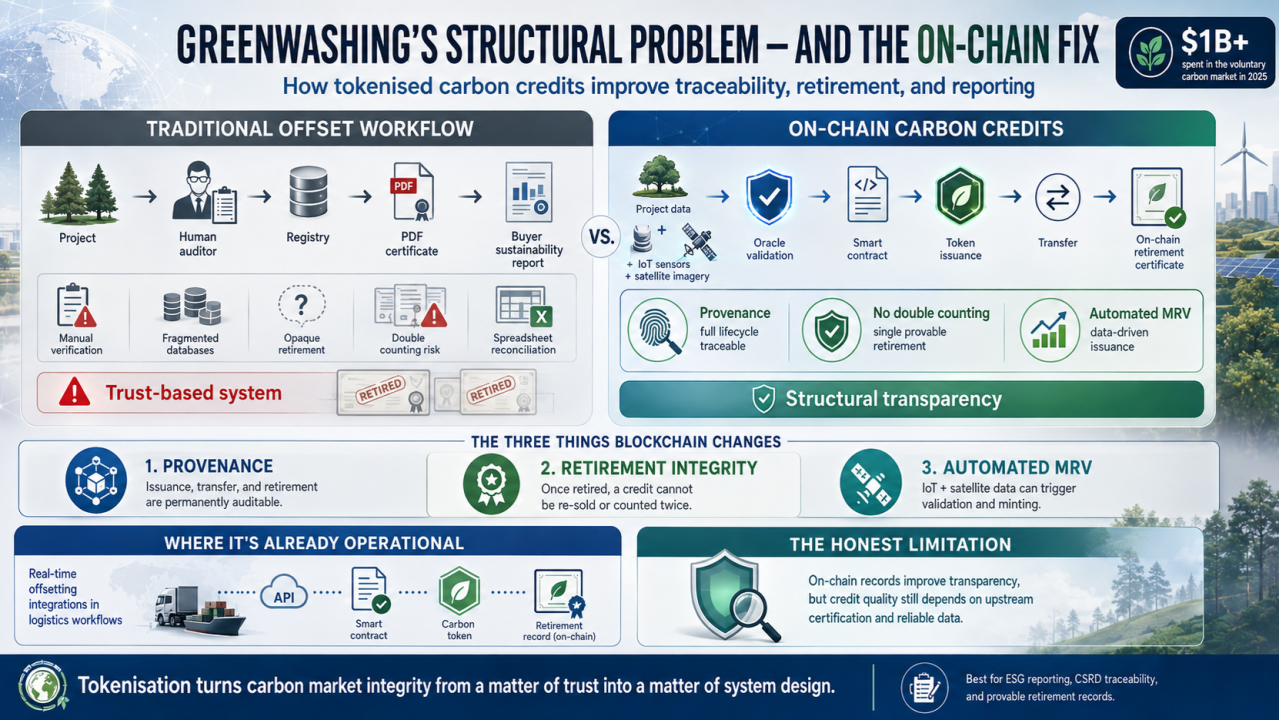
Greenwashing's Structural Problem: the On-Chain Fix
The voluntary carbon market hit $1B in spending in 2025, yet buyers still largely can't verify that a credit hasn't already been retired elsewhere. The problem isn't fraud, it's opacity...
-
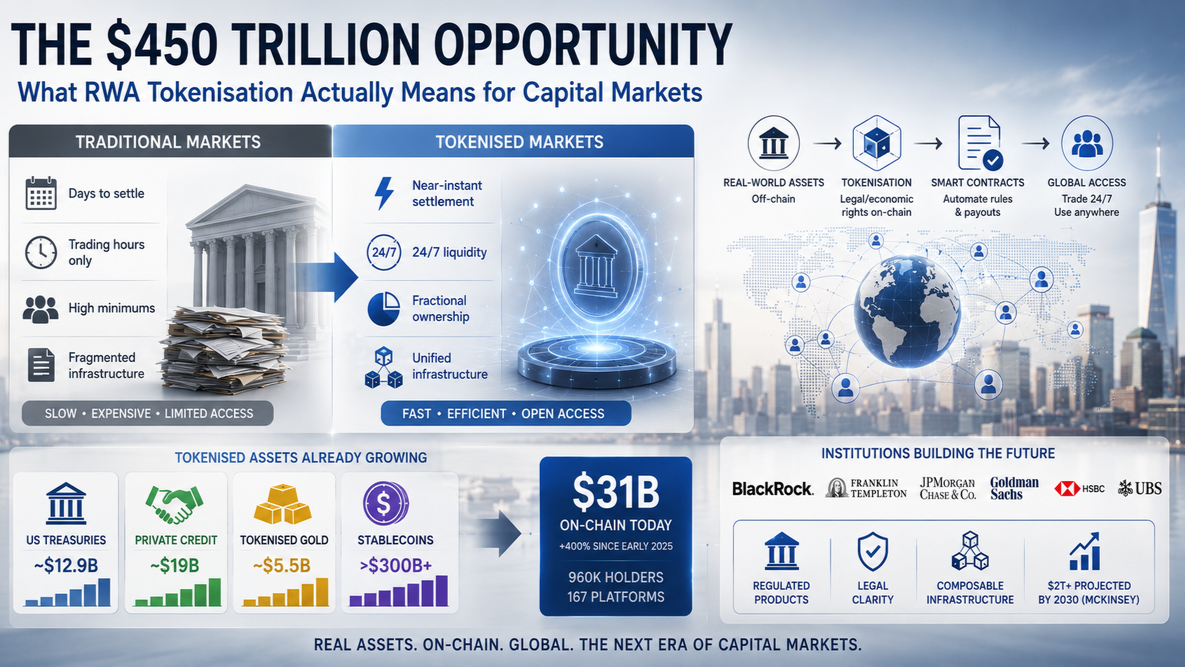
The $450 Trillion Opportunity
BlackRock launched a tokenised Treasury fund on Ethereum in 2024. By mid-2026 it had crossed $2.5B in assets, expanded to nine blockchains, and started trading on Uniswap. This isn't a...
-
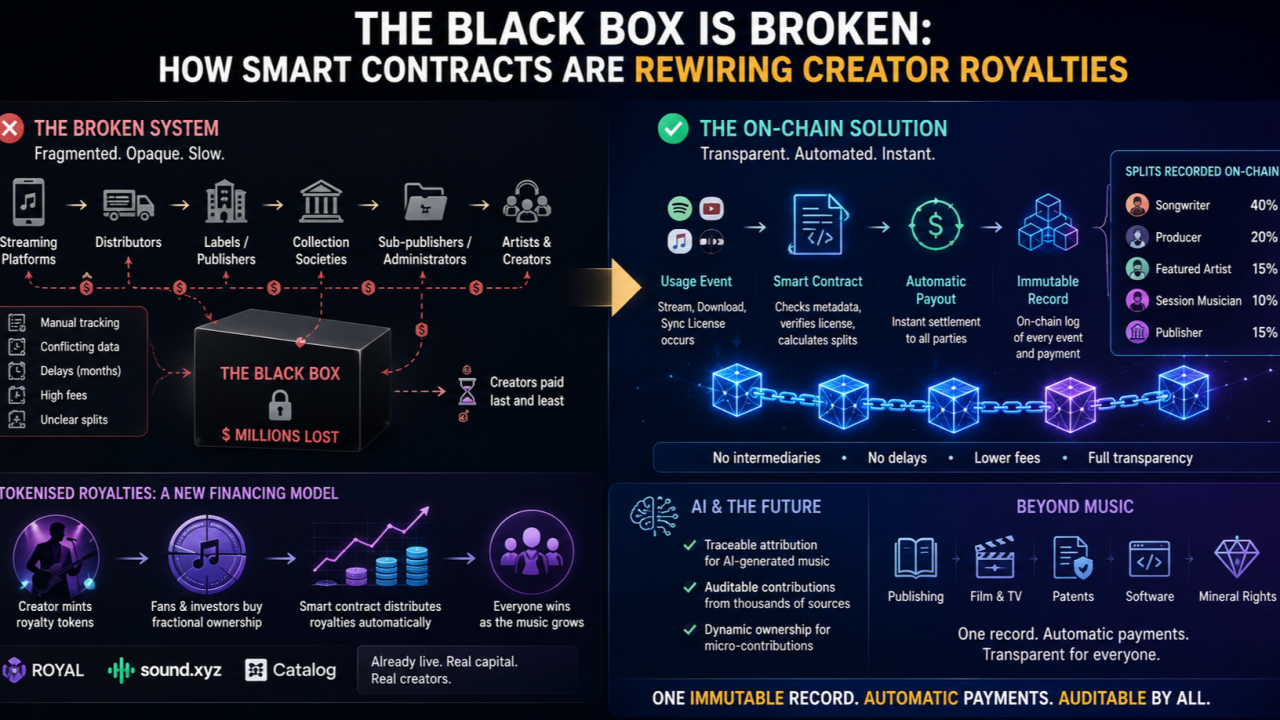
The Black Box Is Broken: How Smart Contracts Are Rewiring Creator Royalties
The music industry has a name for royalties that get collected but never paid out: the black box. Smart contracts fix this at the root — register ownership on-chain, define...
-
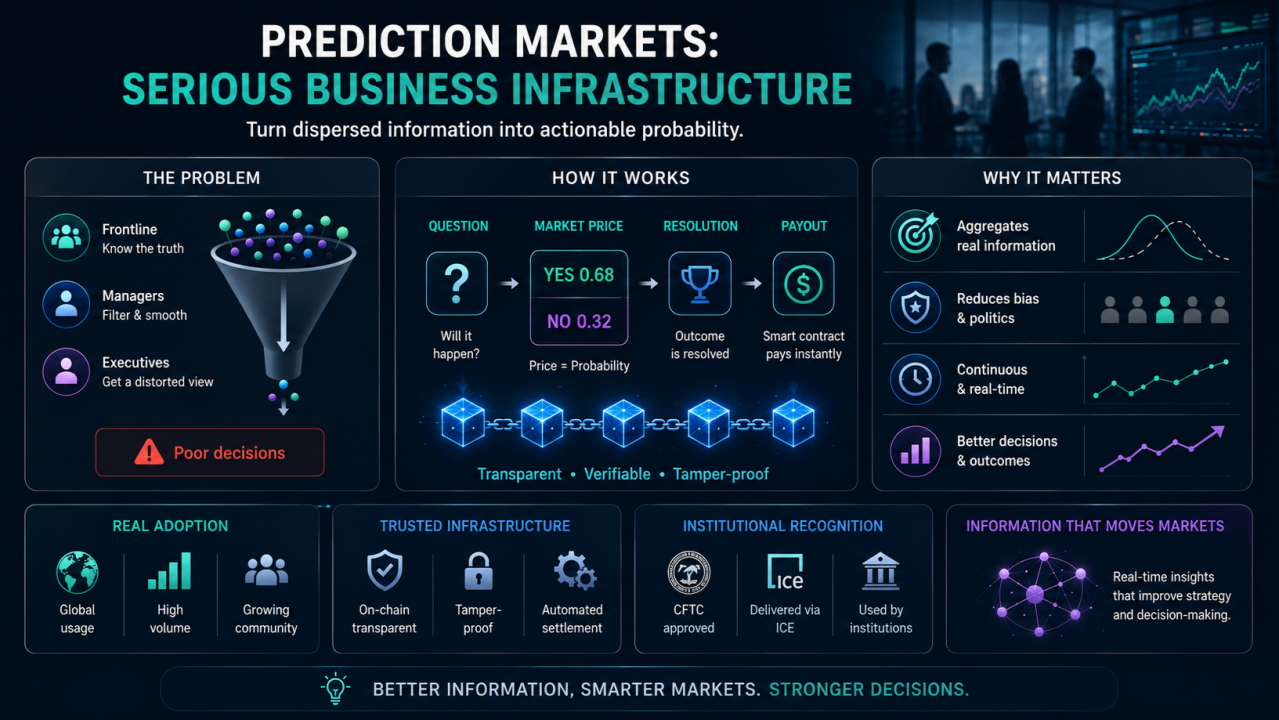
The Crowd Knows First
Everyone in the room knows the project is behind schedule. Nobody says so in the status meeting. Prediction markets surface what people actually believe when there's a cost to being...
-
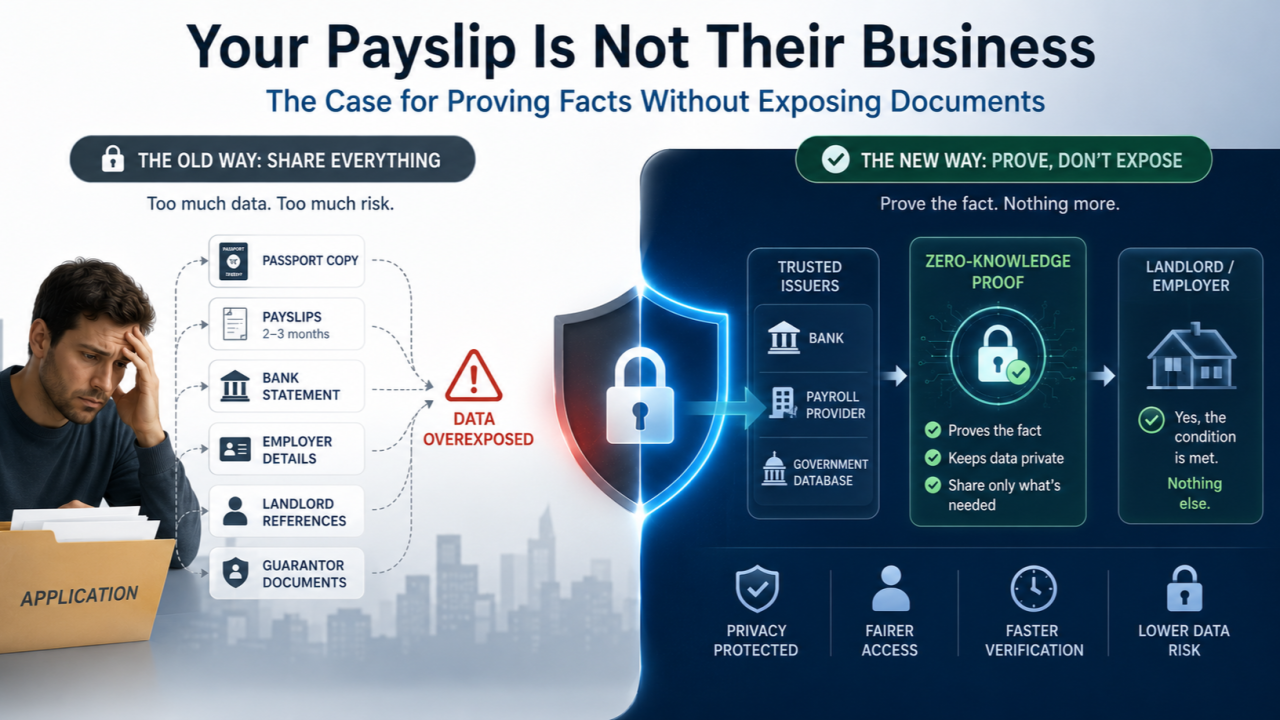
Your Payslip Is Not Their Business
To rent a flat, you hand over your passport, payslips, bank statements and employer details. The landlord's actual question is simpler: can this person pay the rent? Zero-knowledge proofs let...
-
Insurance Without the Argument: What Happens When the Claim Files Itself
Insurance claims aren't slow because the damage is hard to see. They're slow because someone has to argue about how much it's worth. Parametric insurance skips the argument entirely.
-
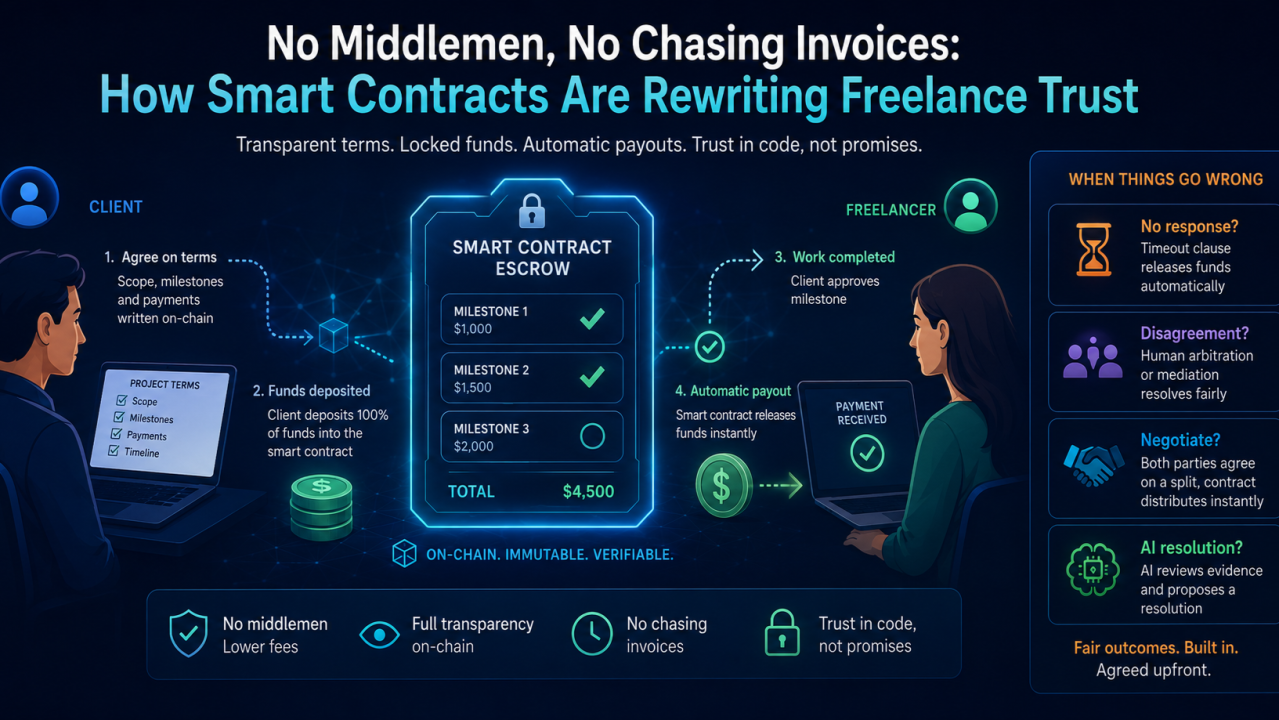
No Middlemen, No Chasing Invoices
Smart contract escrow is quietly replacing the freelance platform model. It removes the middleman whose job was to be trusted, and replaces it with code whose behavior is fixed and...
-
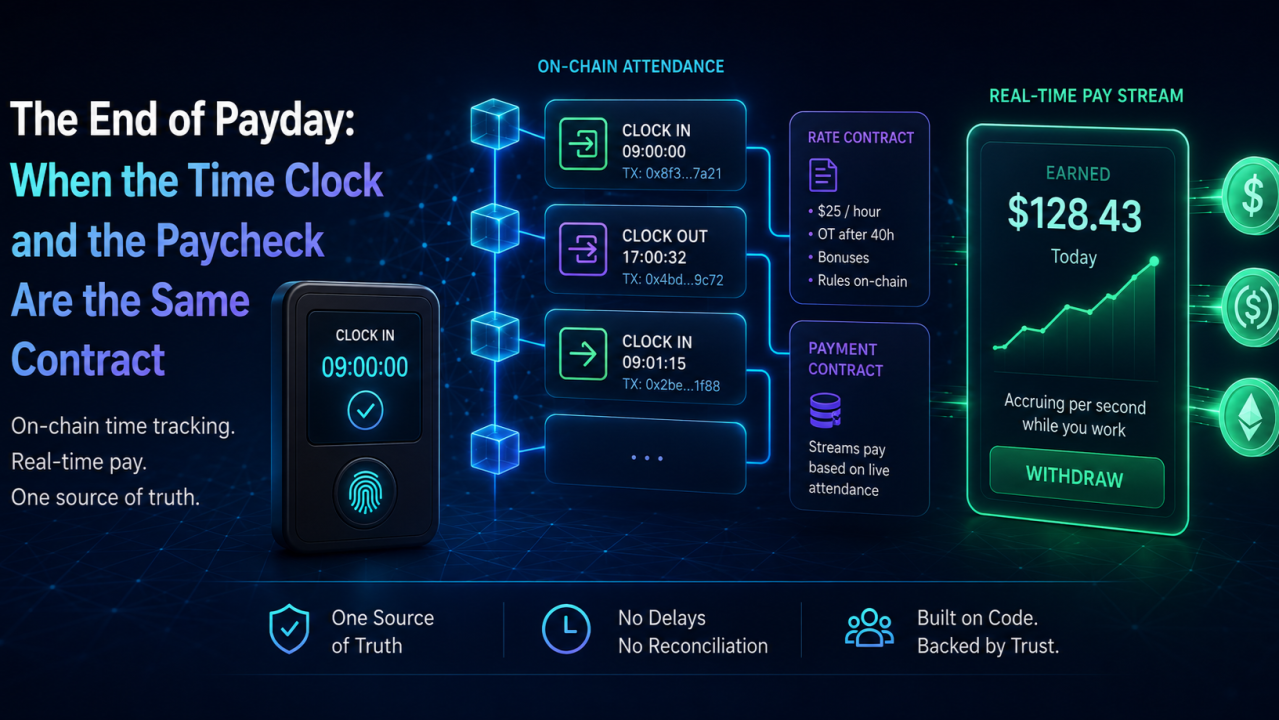
The End of Payday
Payroll still runs on 1970s logic: log hours, wait for approval, get paid weeks later. What if the clock-in and the paycheck were the same contract?
-
Smart Contracts Beyond DeFi and NFTs: A Twelve-Part Series
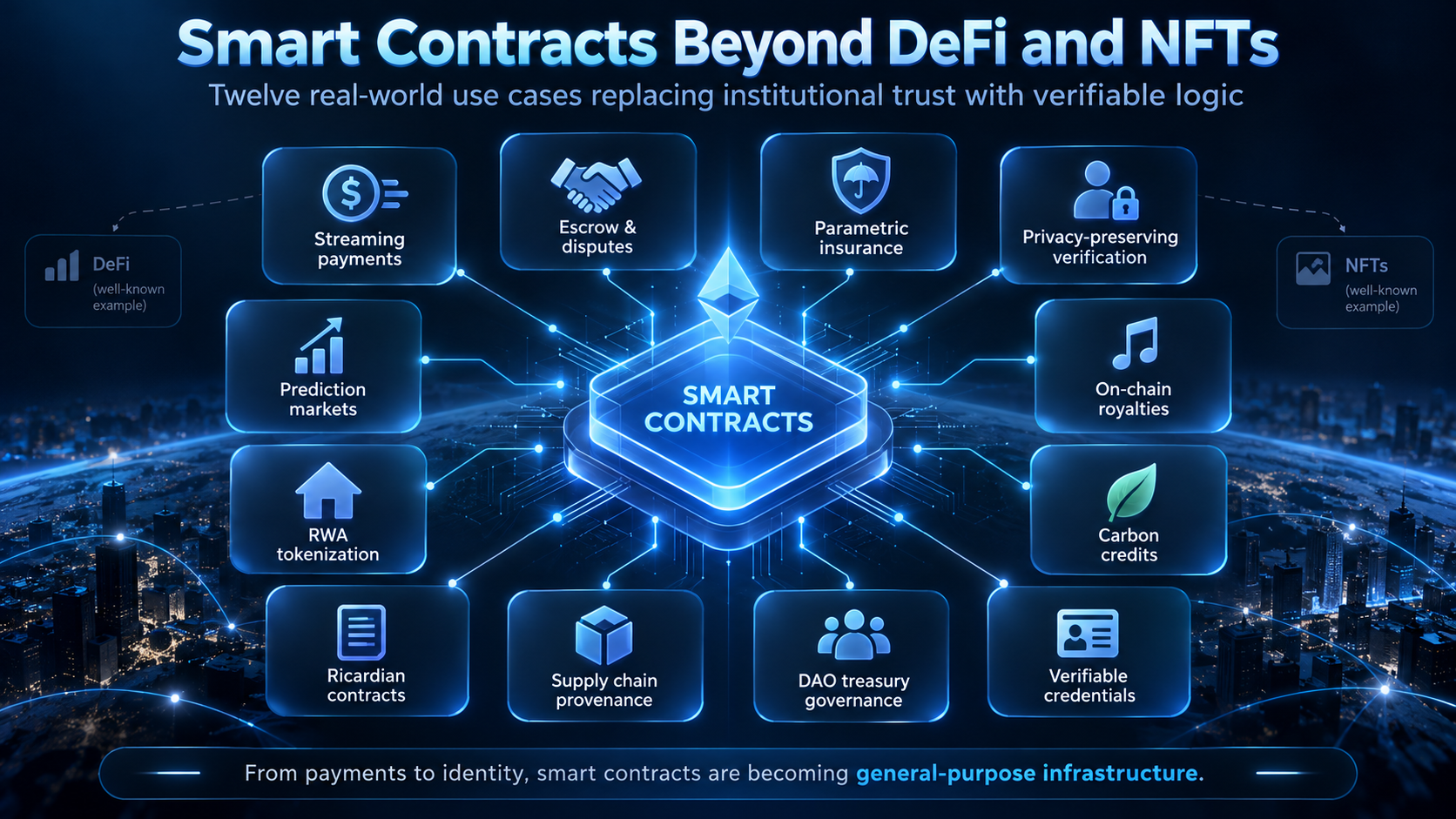
Smart contracts are routinely reduced to two use cases: decentralised finance and NFTs. That framing is years out of date. Over the next twelve articles, I look at where smart...
-
Resilient by Design: Why IT Systems Must Be Built to Fail
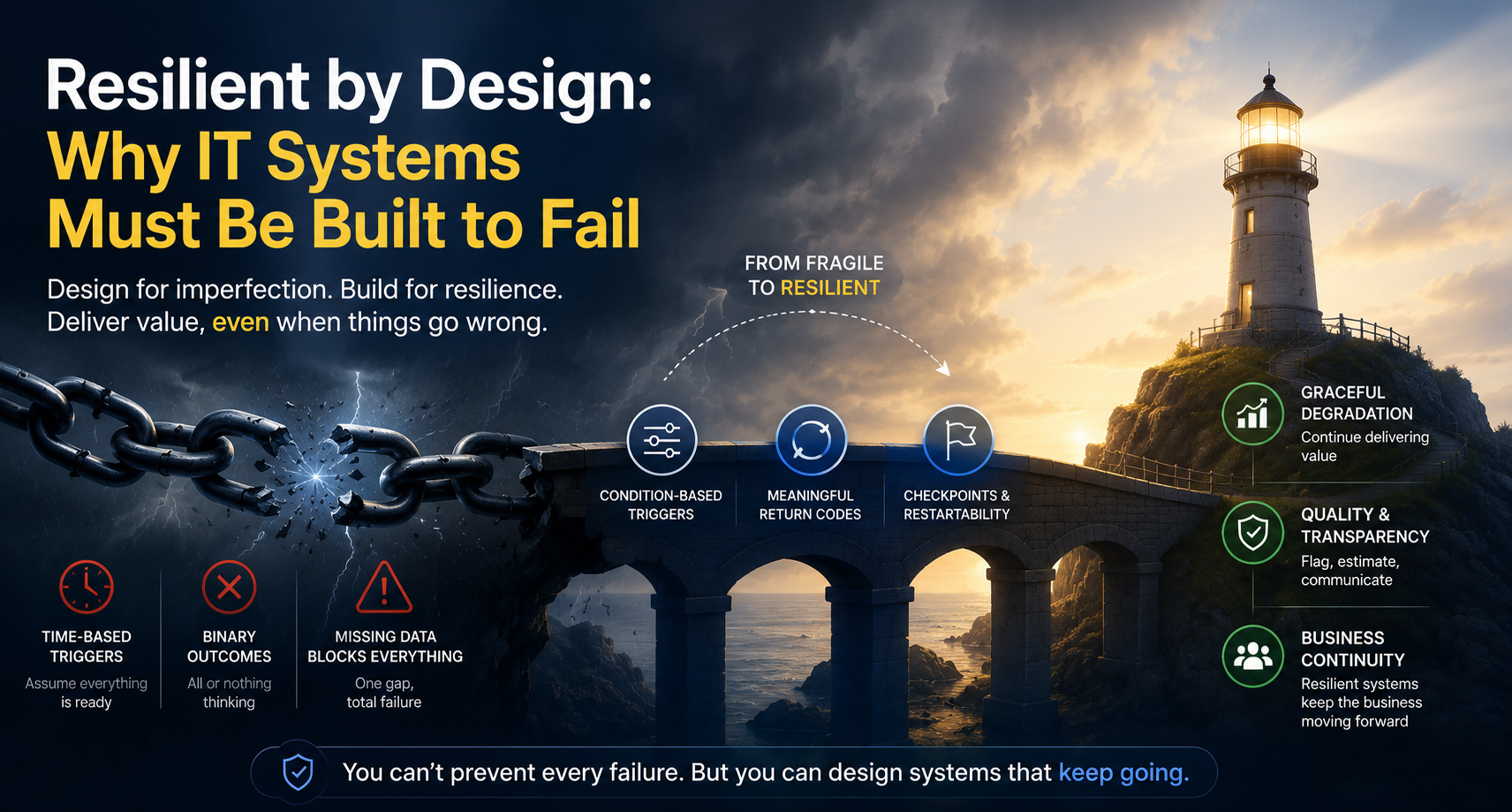
Reliability asks: does the system work? Resilience asks: how does it behave when something goes wrong? The systems that last are not the ones built to be perfect, they're the...
-
The Infrastructure Is Ready. Are We Using It?
Blockchain, mobile rails, open APIs, and generative AI have quietly made the old financial infrastructure constraints obsolete. The inflection already happened.
-
HTTP Has Had a Payment Mechanism Since the 1990s. Almost Nobody Used It. That Might Finally Change.
For 30 years, the web has been extraordinary at moving information and terrible at moving money. A dormant HTTP status code from the 1990s might be about to change that....
-
Bridging Money and Markets: Why Fiat and Securities Must Live on the Same Network
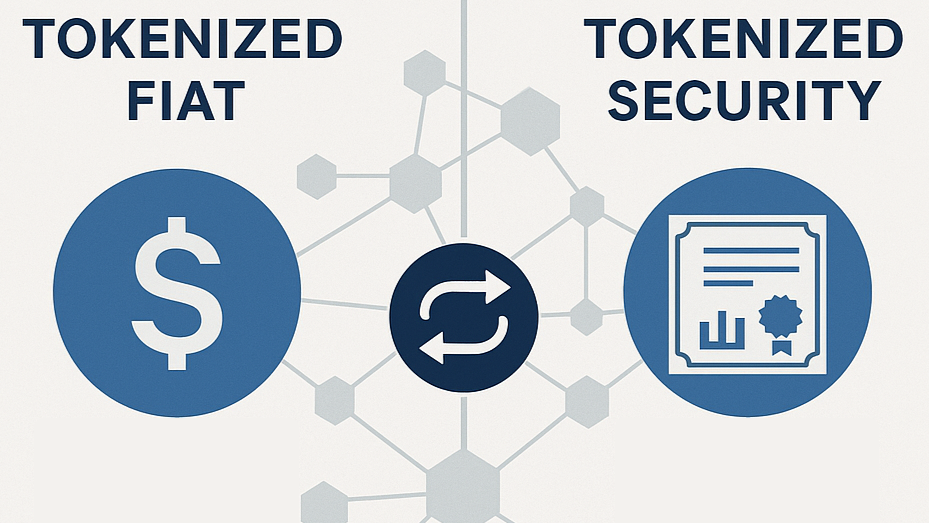
For decades, money and securities have moved on separate rails — generating billions in reconciliation costs along the way. Blockchain offers something genuinely new: a single network where both can...
-
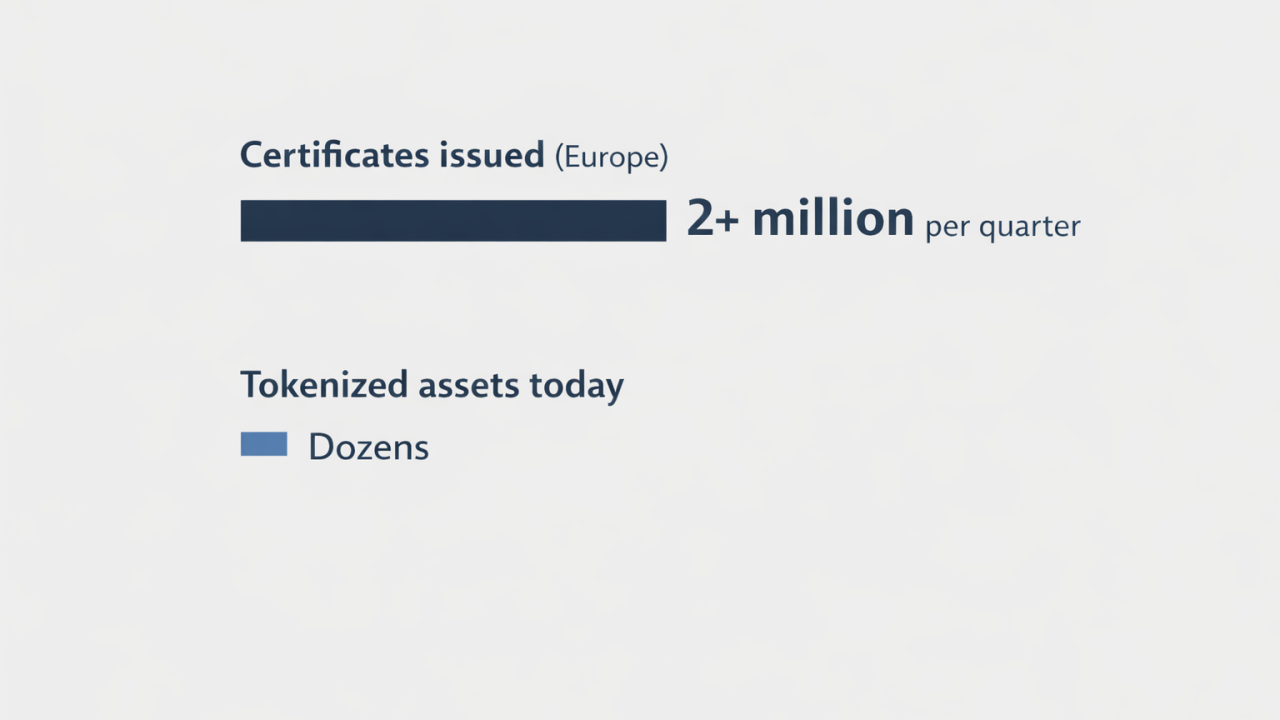
Asset Tokenization: Between Hype and Real Value
Tokenization has been promised as the cure for decades-old securities infrastructure. So why hasn't it delivered? A closer look at where the real opportunities lie — and what the industry...
-
Fighting Document Fraud in the Age of AI
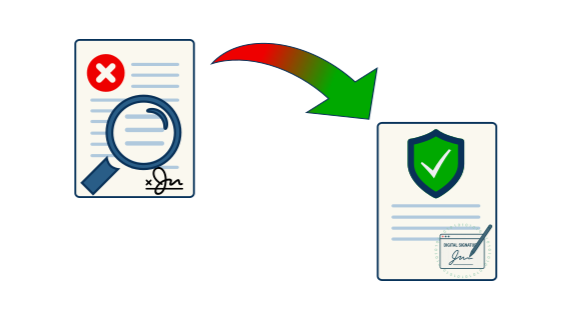
AI has made forging documents easier than ever — but the tools to stop fraud have existed for decades. Digital signatures and blockchain offer a practical, mature, and low-cost path...
-
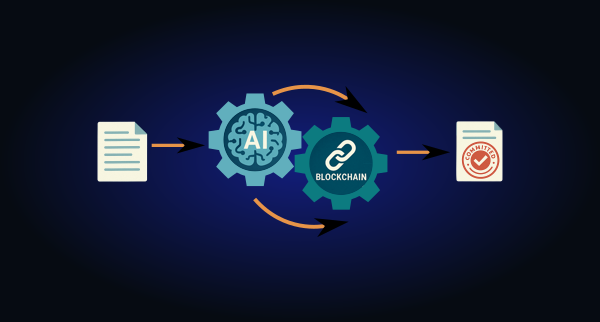
AI decides, Blockchain commits: the future of digital processes
AI is creating a huge wave and setting enormous expectations. Yet if you zoom out from the demos and follow the typical hype cycle, the mid-term reality is likely to...
-
Tokenization is not yet an industrial technology
A practitioner analysis of the economic gap, regulatory constraints, schema standardization, secondary market liquidity, and demand-side barriers standing between tokenization and industrial scale.
-
My Digital Journey
My Digital Journey
-
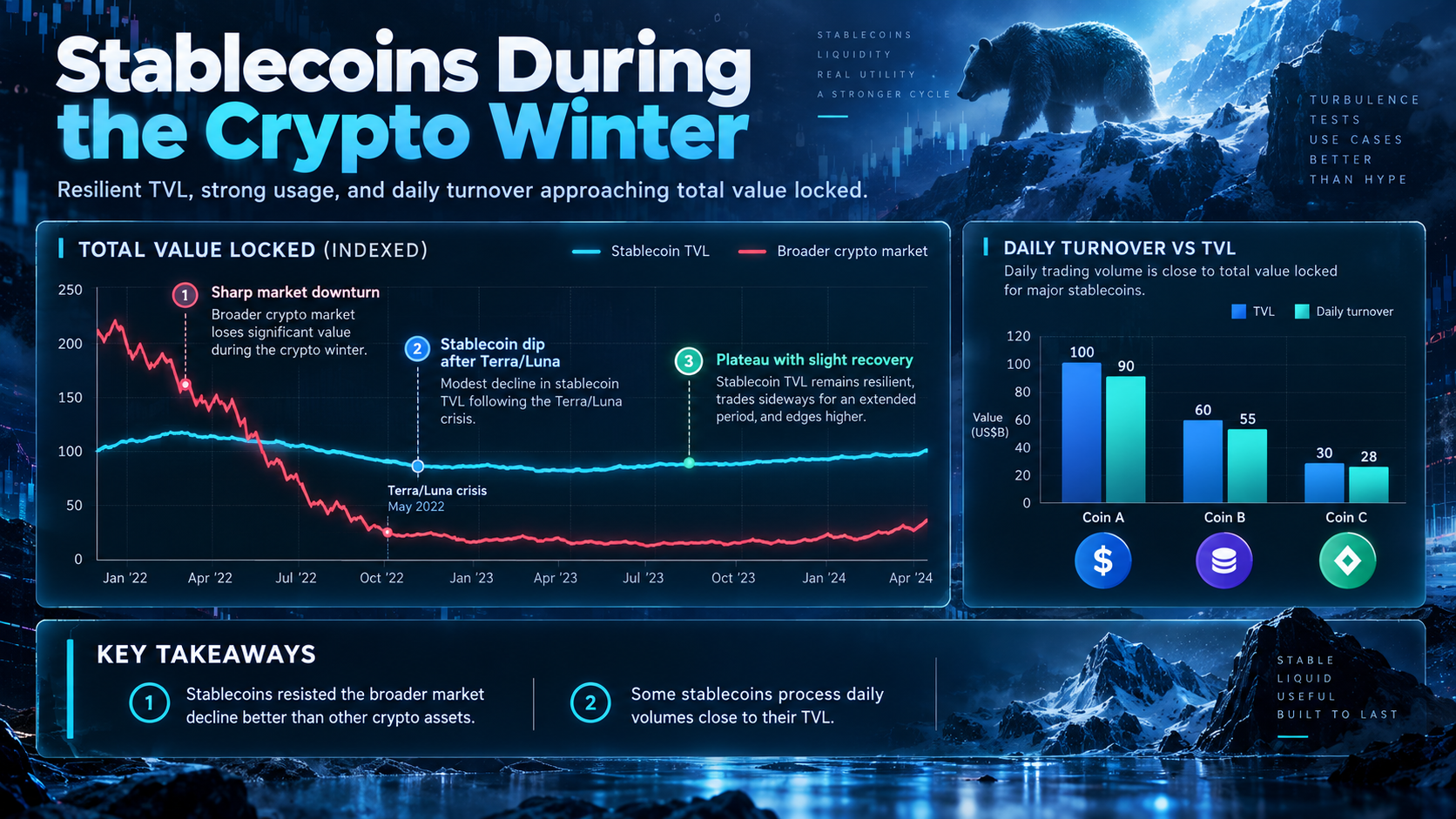
Total Value Locked in Stablecoins During the Crypto Winter
Despite the severe drop in crypto markets, the stablecoin market has resisted well, dipping after the Terra/Luna crisis but holding a plateau since, with some coins' daily turnover approaching their...
-
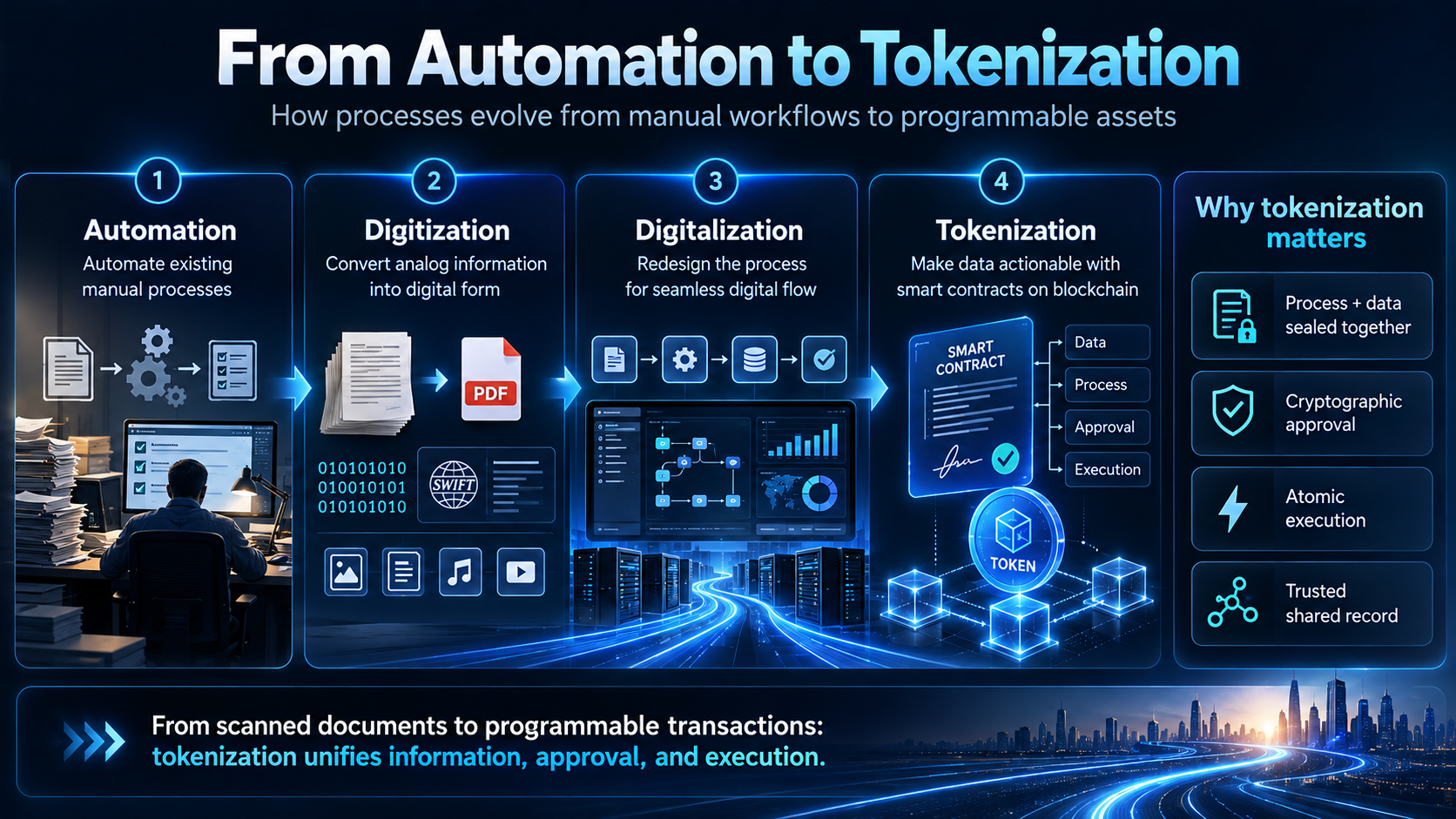
From Automation to Tokenization
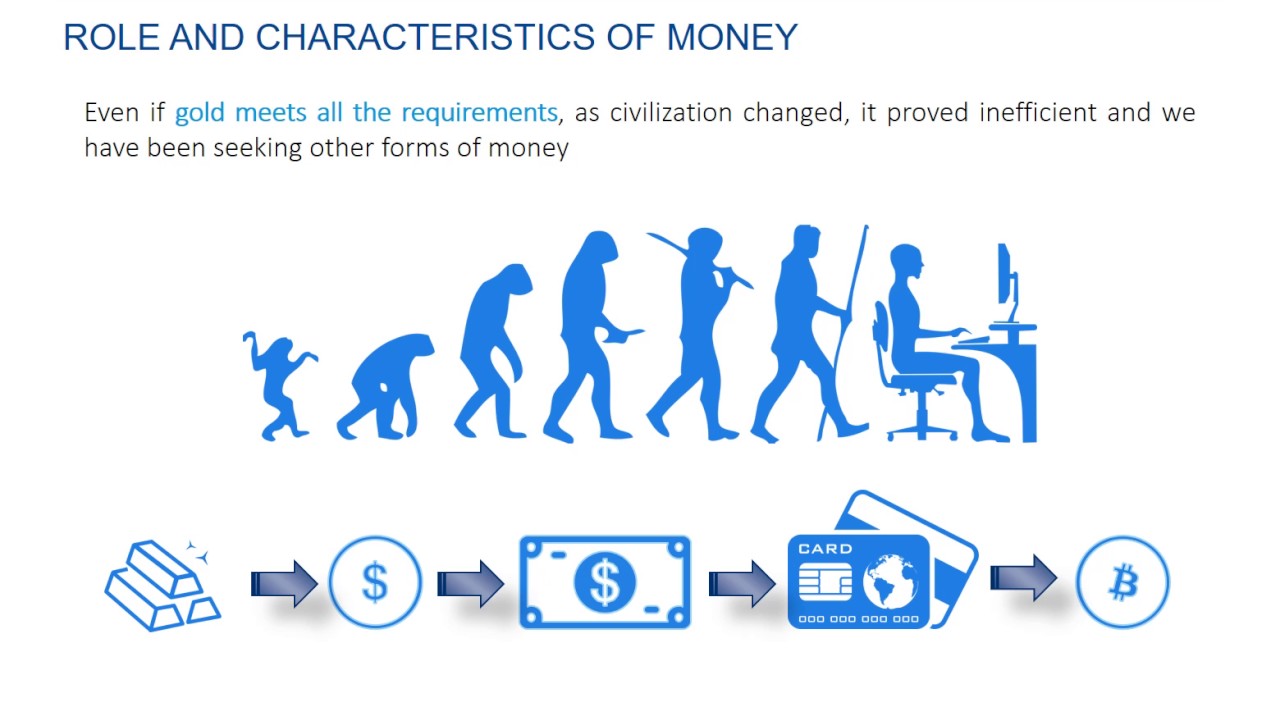
Automation, digitization, digitalization and tokenization are often used interchangeably, but they are distinct stages of the same journey. Here is how each one builds on the last, and why tokenization...
-
Migration to github pages
Merging years of scattered posts from two separate blogs into a single, modern home on GitHub Pages.
-
Seamless integration from token to accounting?
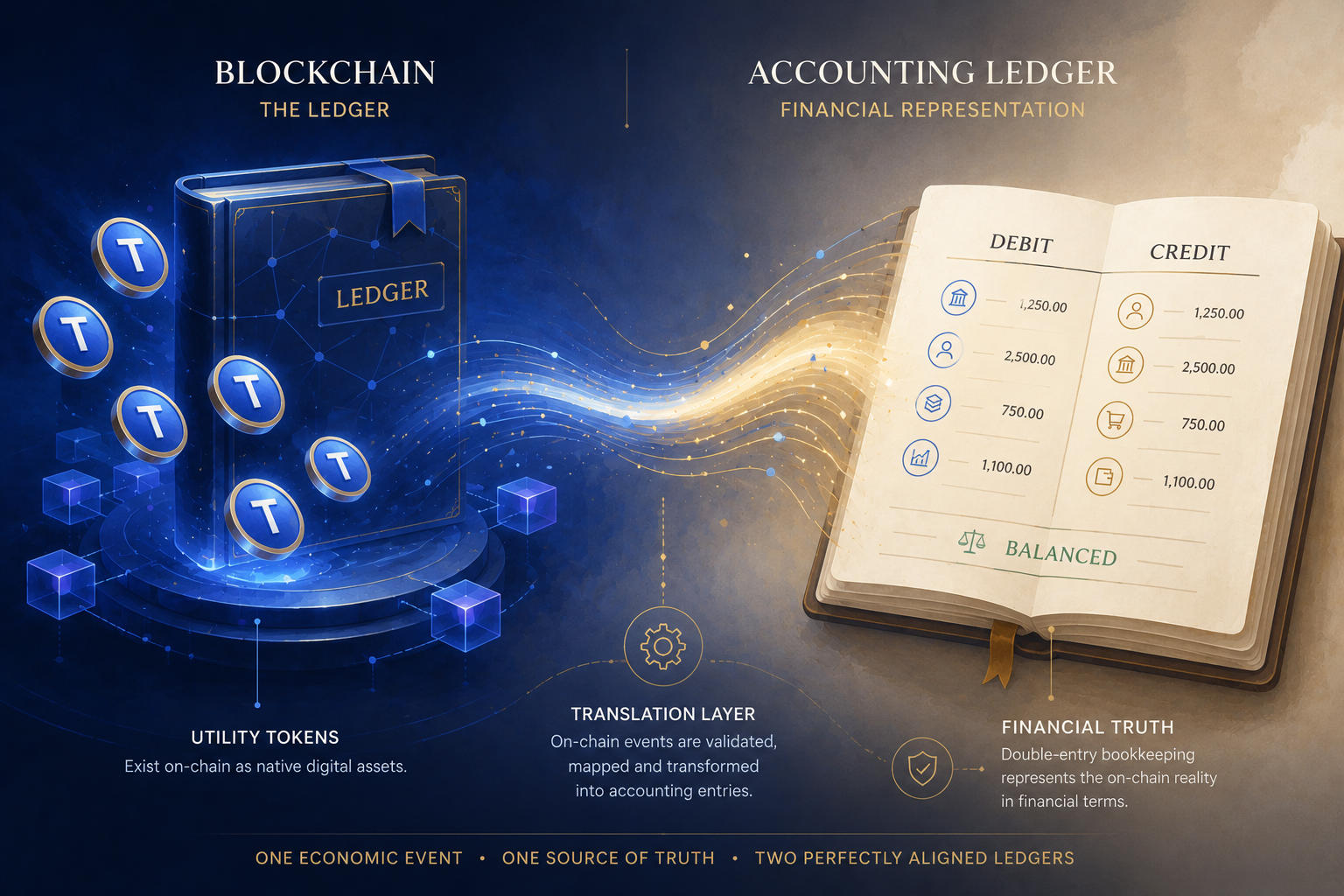
The so-called smart contracts have been around for quite a while with the first global public implementation made available with Ethereum 2015. This technology is a real breakthrough and proved...
-
Introduction to Blockchain
A two-part introduction to blockchain technology, prepared for and delivered to students at the University of Edinburgh.
-
Looking for blockchain use cases in our daily life
Looking for Blockchain use cases in our daily life, we came across the idea of using Blockchain for parking tickets. To move this idea further we have been presenting it...
-
Smart Contracts : a new development paradigm
I am unfortunately old enough to have lived a number of paradigm shifts. In particular the shift from procedural to object-oriented programming and from monolithic to distributed to name a...
-
Internal use of Blockchain?
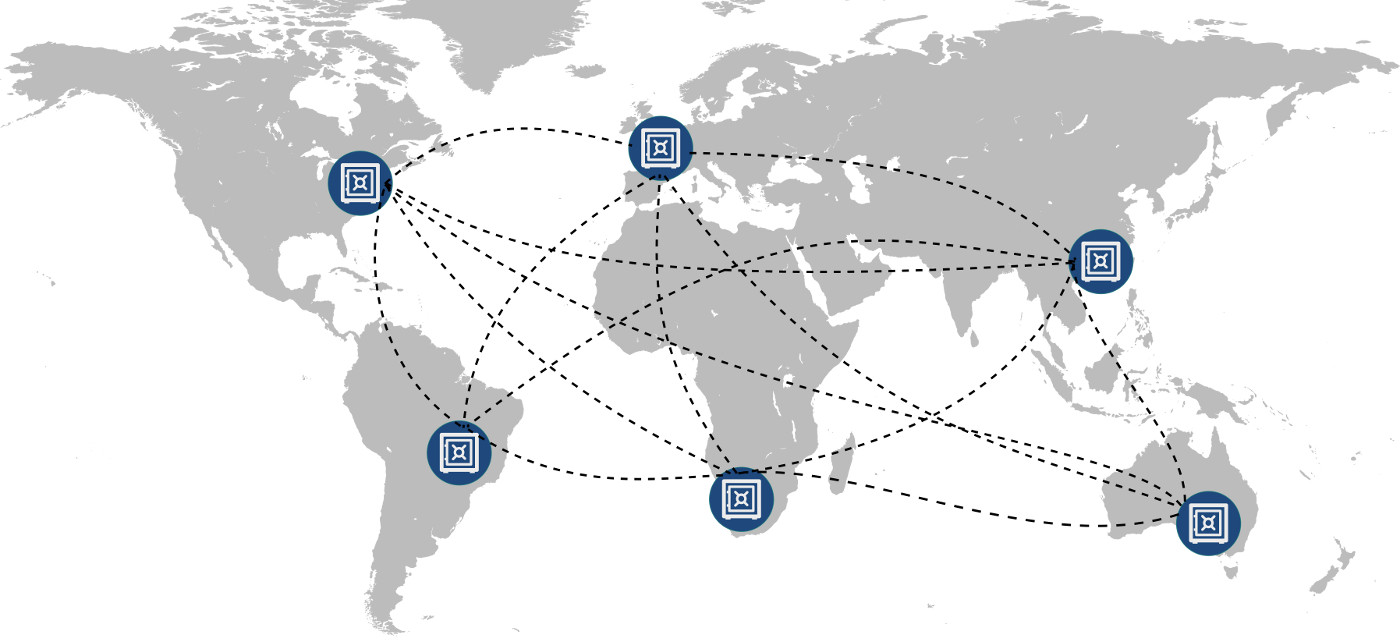
Large banks replicate trades across dozens of internal legal entities to serve customers locally. A shared internal ledger could remove most of that replication and reconciliation overhead.
-
Blockchain deploiement
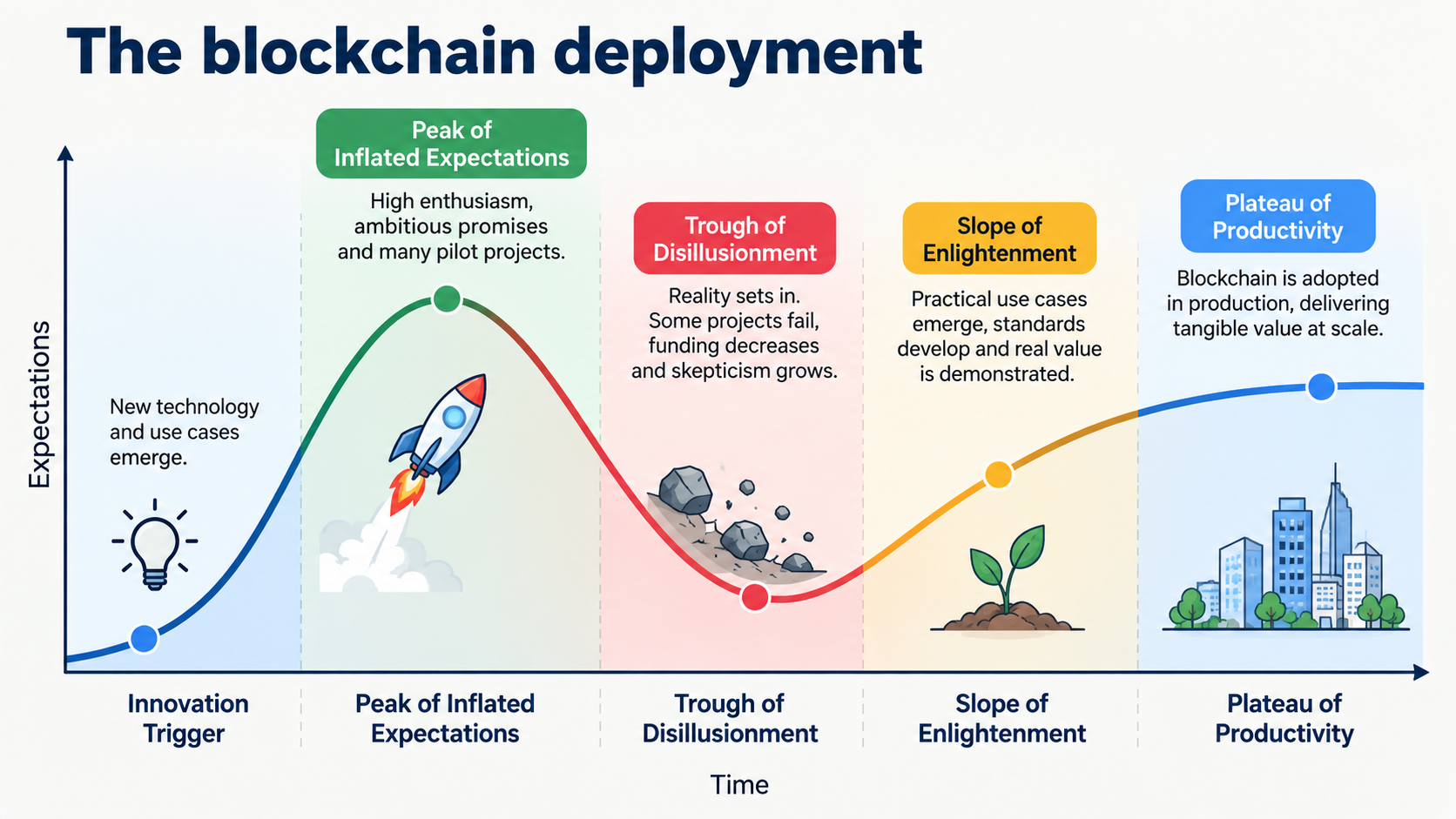
Blockchain promises billions in infrastructure savings for banks, but complex, multi-party ecosystems will adopt it unevenly. The smaller and less entangled the ecosystem, the faster it will move.
-
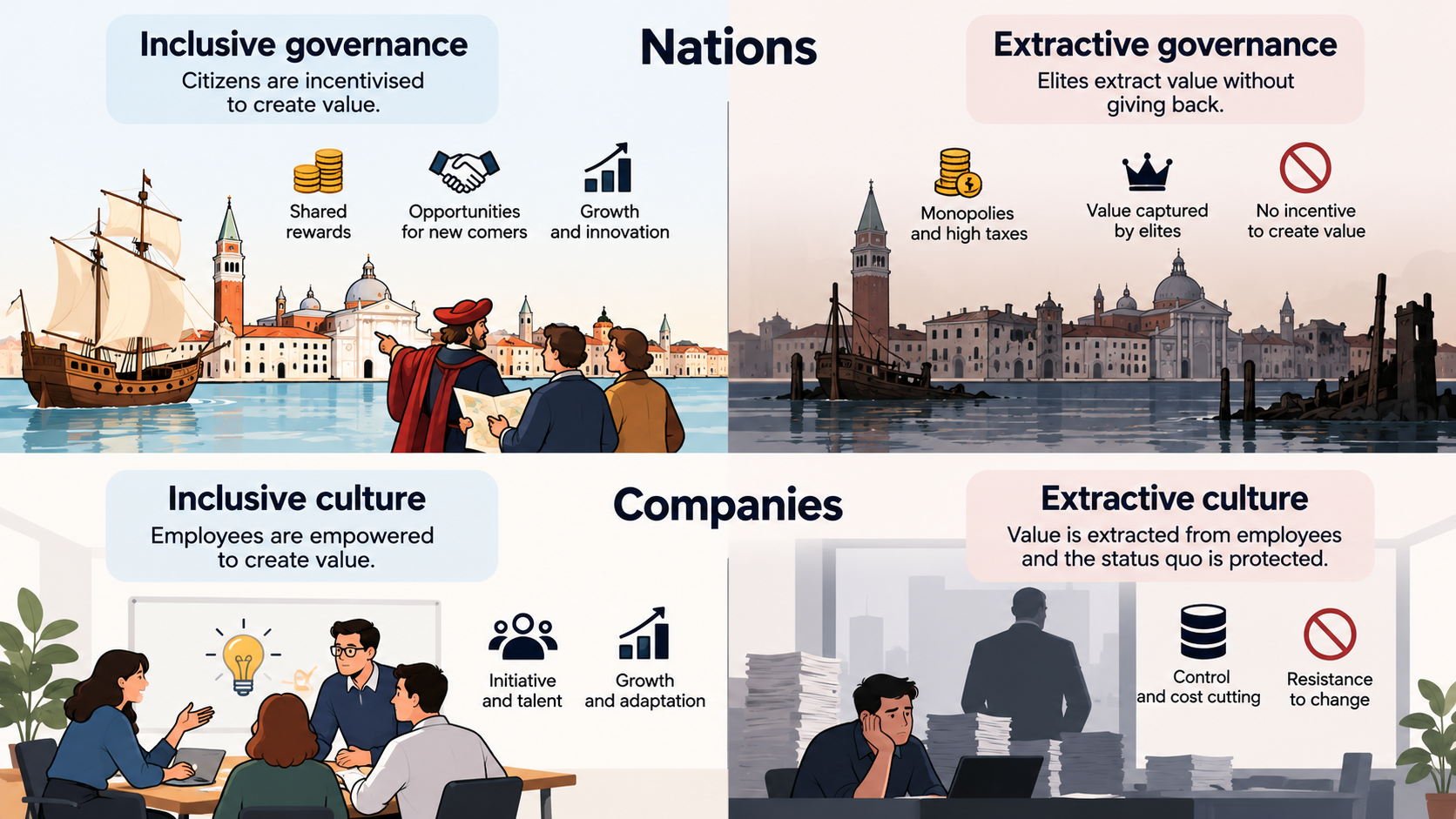
Why Nations Fail?... and Why Companies Fail?
A look at Acemoglu and Robinson's Why Nations Fail, and the parallel between extractive vs. inclusive governance in states and in companies.
-
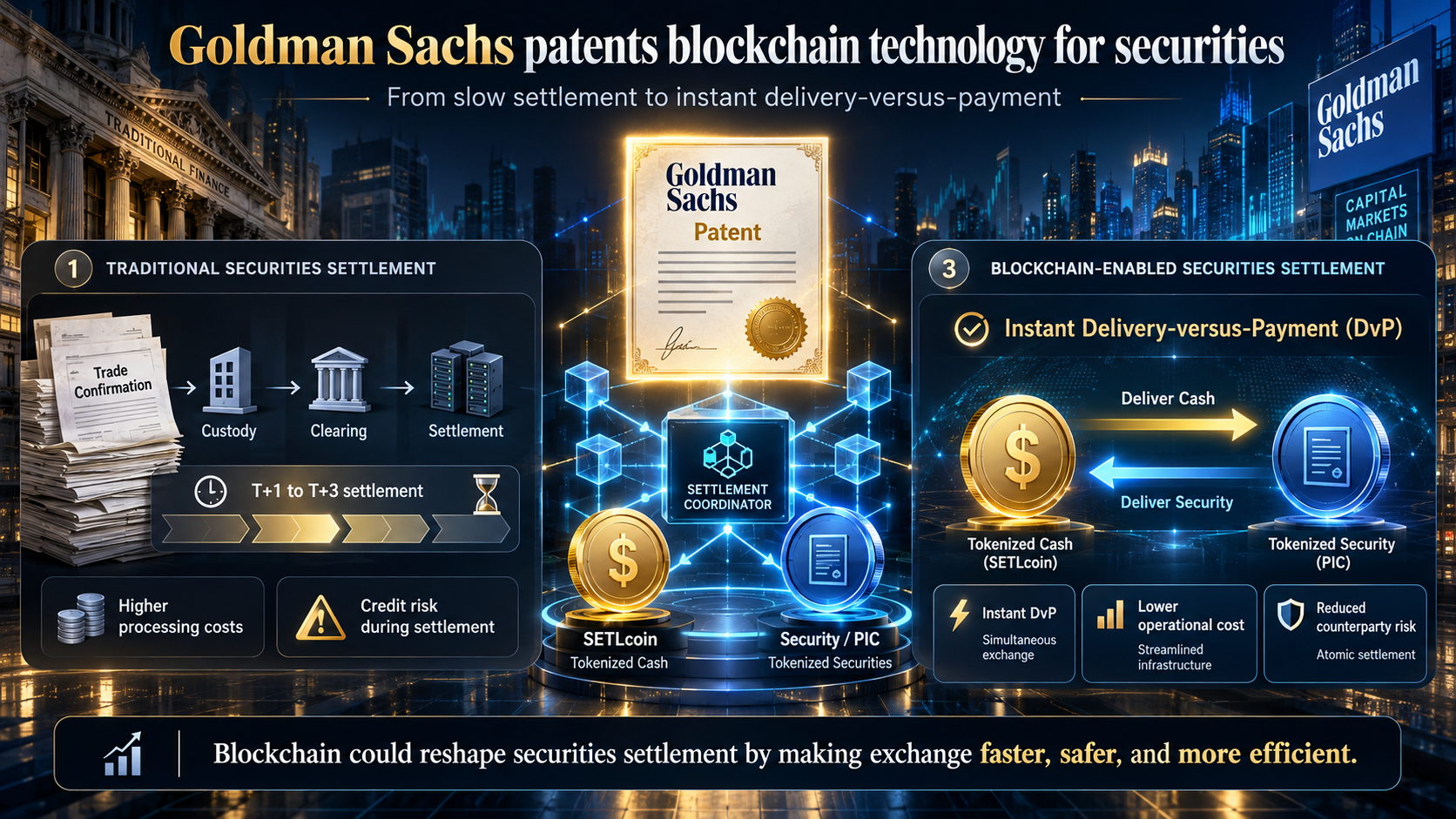
Goldman Sachs Patents Blockchain Technology for Securities
Goldman Sachs patents SETLcoin, a blockchain-based settlement mechanism aiming for simultaneous, risk-free delivery-versus-payment for securities.
-
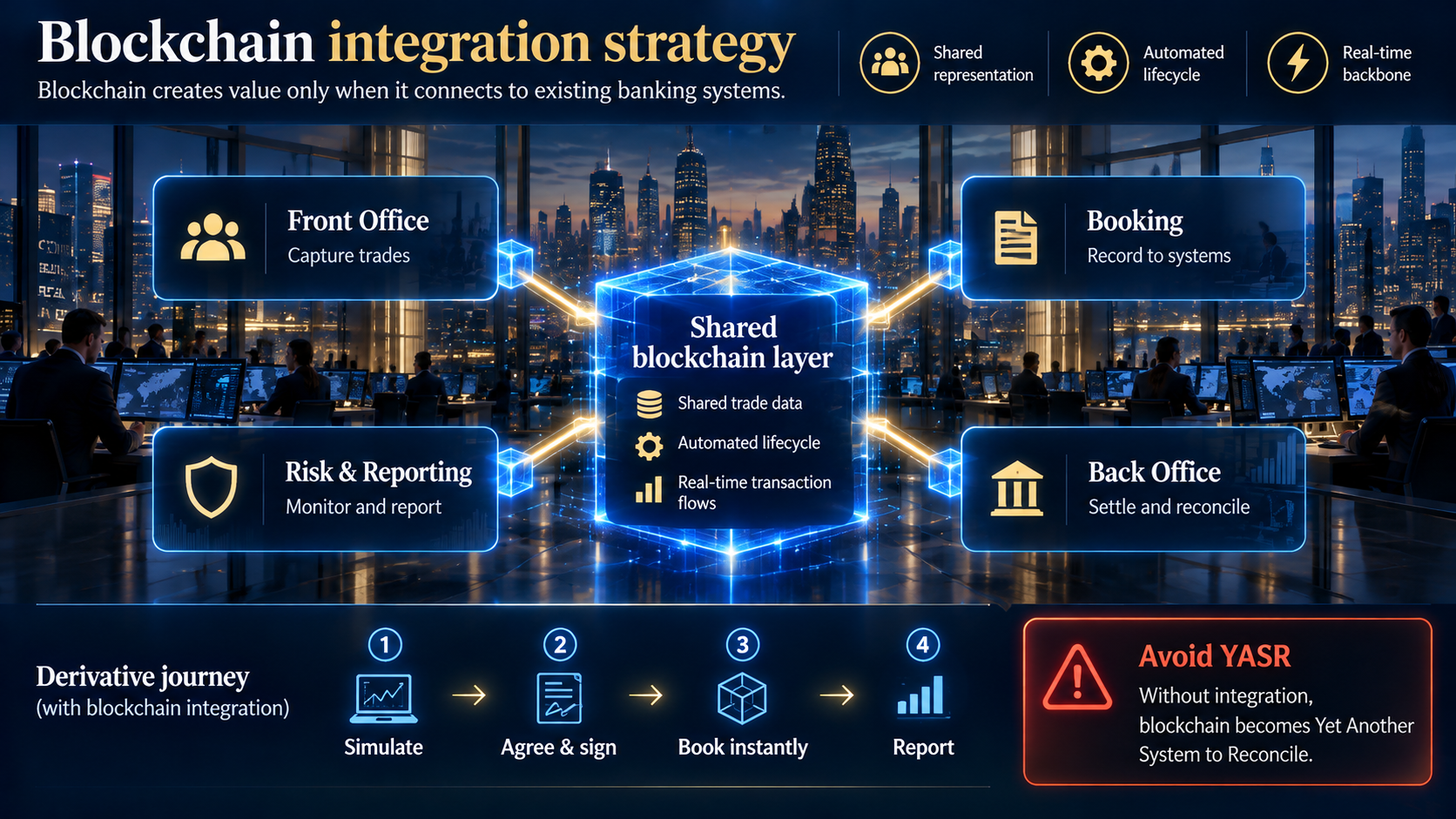
Blockchain Integration Strategy
Blockchain and smart contracts promise huge efficiency gains for banks, but only if the ledger is properly integrated with existing front-office, accounting and risk systems — not bolted on as...
-
Beyond bitcoin
As seen in the previous post, the Bitcoin technology is expanding since a few years beyond bitcoin it self.More coins to start with ...The first area of expansion has been in the crypto currency...
-
bitcoin or Bitcoin ?
This weird question is hiding a huge trend : the blockchain revolution. To be a little less cryptic, bitcoin comes in two flavours: a crypto currency (bitcoin) and the technology...
-
The fintech arena
Fintech is a term describing companies combining technology and finance. It often relates to small startups which bring to the market innovative technical solutions. Over the last years, those fintechs...
-
Why App stores for banks ?
App store for banks is nowadays becoming very fashionable and trendy. Bundling banks' services through an API is either done by the bank itself (BNY for example) or by fintechs connecting...
-
The Fintech revolution is on-going
“Be nice to nerds. Chances are you'll end up working for one.” -- Bill GatesMany bankers would not like this quote! Nevertheless the situation Bill Gates pictured is becoming quite...
-
Project portfolio representation
Large corporations often struggle to represent their huge projects portfolio in a structured and readable manner.Of course, there are number of ways to present projects portfolio from a performance point...
-
Open innovation and private banking
In the last years, banks have been attacked in many segments of their value chain. New entrants like Pay Pal and more recently Apple have been very successful in developing...
-
Digitalization phases
Digitalization is not coming in one go, it goes through 3 main steps. Some industries have been involved much earlier than others in the digitalization revolution. Capital markets have been involved...
-
Culture and international companies
International companies are said to have a very strong culture. In fact, this is mandatory not only to motivate employees but also for offsetting cultural differences coming from different countries.Even...
-
Why CIOs should not report to COOs
It is very common to see CIOs reporting to COOs or CFOs. Of course there are advantages in doing so : less people directly reporting to the CEO, better alignment...
-
Capital Markets IT attractiveness
In a recent post, I tried to picture the changes transforming deeply the IT within Capital Markets especially in terms of sizing (or better in terms of downsizing).Crisis is not...
-
Why separate support and development?
Pourquoi séparer support et développement ? L'infrastructure et le développement ont été séparés depuis des années dans la plupart des entreprises. Une autre séparation est également souvent faite entre le...
-
VO ou VF ?
Blogger ne supporte malheureusement pas nativement les posts dans plusieurs langues. Heureusement la communauté très active a trouvé une parade !Tout n'est pas parfait, mais les deux petits drapeaux permettent de...
-
IT Department should not compete with external providers
Very often internal IT departments are competing with external providers, they mimic their processes, pretend to be independent, … but there is a key difference that cannot be forgotten, an...
-
Capital markets IT
An incredible growthIn the last 20 years, the very strong growth on capital market has triggered huge investments. For some companies strategy was pretty straightforward: any product, anywhere! Focus was definitely on...
-
IT and unmanaged processes
Quite commonly organizations have some undefined or unmanaged processes. This is giving the impression to C level that only IT enforced processes are working fine.Then, to feel more comfortable, top...
-
Incident management
It is quite obvious that Enterprise IT systems are complex and that reliability is a day to day fight. To overcome those difficulties, best practices such as ITIL have been...
-
Service integration is key for agility
I posted 3 years ago a similar message on this blog. Looking at the different conversations around, I think it is still quite valid. To give it a larger audience,...
-
MIS : profit or cost center ?
Three years ago, I posted a similar message on this blog. Looking at the different conversations around, I think it is still quite valid. To give it a larger audience, I am...
-
Trust is IT fuel
Every outage makes IT look bad !Running an IT system is difficult: whenever an outage is popping up, IT department is looking bad in front of its customer, very often...
-
Cloud, SOA, Distributed computing, RPC same potential pitfalls !
It is a while since client/server technology has been first introduced. Technologies have been improving with RPC, distributed computing, SOA, ESB, cloud, ... but the same doubts are always around...
-
Stop building systems supposed to work!
Resilient by Design: Why IT Systems Must Be Built to Fail
-
Porter ou ne pas porter telle est la question !
Depuis l'arrivée des smartphones, se pose de façon régulière la question du portage des applications web existantes sur plateforme mobile. Par portage, il est entendu ici l'utilisation d'un moyen technique...
-
Informatique de gestion : centre de profit ou centre de coût ?
Nous ne parlons ici que de l'informatique de gestion. En effet, l'informatique industrielle, celle qui pilote les usines et les processus de production fait, sans conteste partie de l'informatique stratégique,...
-
Tendances de l'économie et d'internet selon Morgan Stanley
Certes, cette présentation n'est pas d'une brulante actualité car elle a été présentée il y a presque un mois lors d'une conférence sur l'Internet 2.0 à San Fransisco. La raison...
-
Communications unifiées, 3G mobile, SaaS : un cocktail explosif !
J'ai eu l'occasion de réfléchir à l'évolution et la convergence de domaines aujourd'hui distincts mais dont le rapprochement va créer des applications extrêmement innovantes : le mélange de la 3G,...
-
La téléphonie traditionnelle est morte !
Les plus anciens d'entre nous se souviennent sans doute qu'il y a moins de vingt ans, la téléphonie dans les grandes entreprises était gérée par les services des moyens généraux....
-
Off-shore et méthodes agiles
On rencontre régulièrement deux types de motivation pour utiliser des ressources off shore : la recherche du moindre coût ou la dimension du bassin d'emploi quand le marché de l'emploi...
-
Génération de code et off shore
La délocalisation touche maintenant depuis quelques années les métiers de l’informatique et plus spécifiquement les métiers du développement. Il n’est donc peut-être pas inutile de regarder des expériences plus anciennes,...
-
Créativité et Génération de code
Certains pourraient penser que la génération de code et la modélisation en général vont brider la créativité de leurs développements en leur imposant un carcan dont ils ne pourraient s’échapper...
-
Outils de Workflow
Pour les outils de workflow, comme pour beaucoup d'autres technologies, les concepts ne datent pas d’hier. Ces outils tentent de donner un support informatique à la mise en place de...
-
Intégration de Services et Urbanisme
Sans remonter aux origines de l’informatique, l’intégration de service existe depuis longtemps. On trouve dans les Remote Procedure Call (RPC) des tentatives d’intégration de systèmes ; ceci a trouvé un...