Internal use of Blockchain?
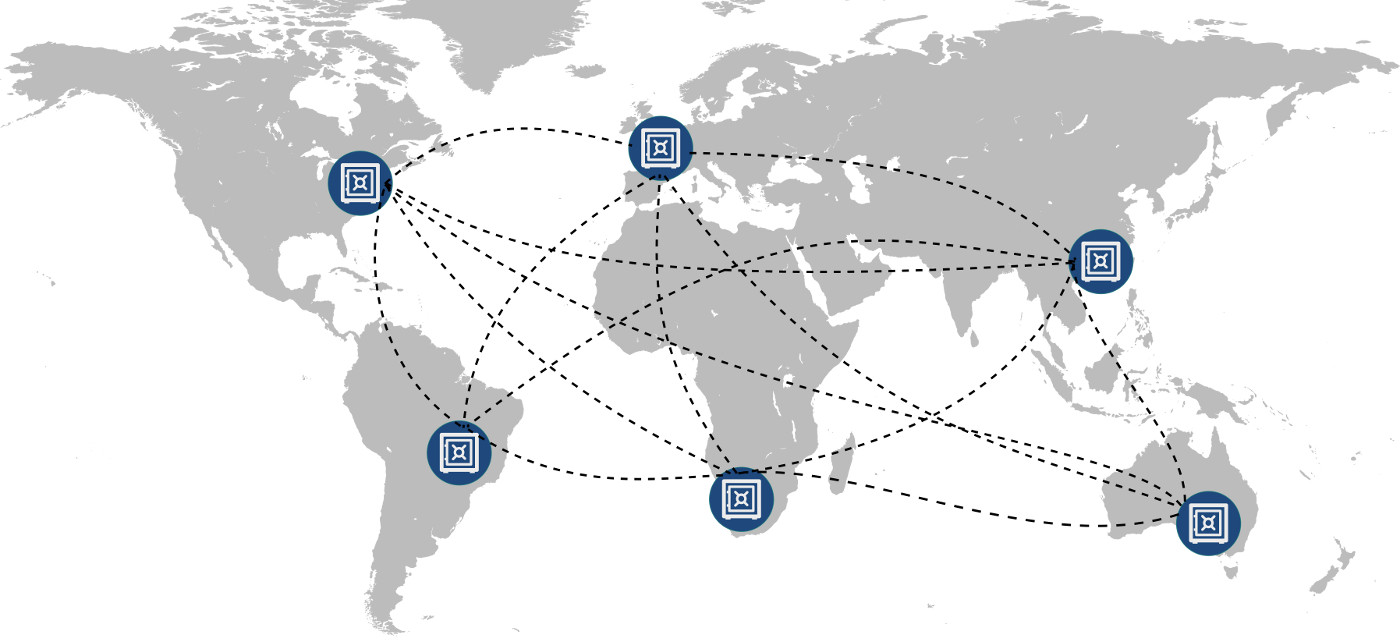
It has already been mentioned by some banks — like UBS — that they are considering blockchain technology for internal use. Mizuho also announced a similar approach a few days ago.
This may sound strange, but it helps to know that large banks operate as a vast network of more or less separate legal entities. As financial products have grown more complex, and as banks have tried to rationalize their setups, they have centralized product and risk management into a handful of hubs around the globe. But they still have to book trades with customers locally, since a customer may not wish to transact overseas. As a result, banks massively replicate trades between their internal entities.
Replicating trades is not straightforward. It is not just a matter of copying trade details — it also means applying the same interpretation to the trade and running the same life cycle for both the original trade and its internal copy.
To manage this, banks have tried to share systems (front office, back office, sometimes accounting) across geographies, so as not to replicate the underlying business logic. Even so, the data itself is still replicated, which means it has to be reconciled, continuously, for the entire life of the trade.
Sharing a global ledger internally — across what can be 100+ entities — could bring substantial savings. Giving every entity the same trade representation and the same life cycle, whether it is selling the product or managing it afterwards, would greatly simplify trade management.
Blockchain technology will develop in steps: it cannot replace a full ecosystem built over decades overnight. It will therefore start in areas with less legacy infrastructure to displace. And for sure, deciding to use this technology internally is far easier than convincing an entire industry to migrate to a new system together. Banks that go this route will gradually build their expertise, and will be better positioned to offer this kind of service to their own customers sooner.